Export timesheets to QuickBooks.
Approved hours leave Daybill in a QuickBooks Time import CSV with the employee name, service date, hours, rate, and amount. There is no account linking or retyping.
- Step 1: Approve the hoursTimesheets follow the normal review. Only approved entries reach the export, so the file is payroll-ready by construction.
- Step 2: Open the payroll exportFrom Timesheets, choose Export and select QuickBooks. Daybill checks the batch and warns you if an employee name is missing.
- Step 3: Download the CSVEach entry becomes one row with Employee Name, Service Date, Hours, Hourly Rate, and Amount. Rates come from the records you already maintain.
- Step 4: Import in QuickBooks TimeIn QuickBooks Time, open Timesheets → Import and upload the file. Names must match the team members in QuickBooks.
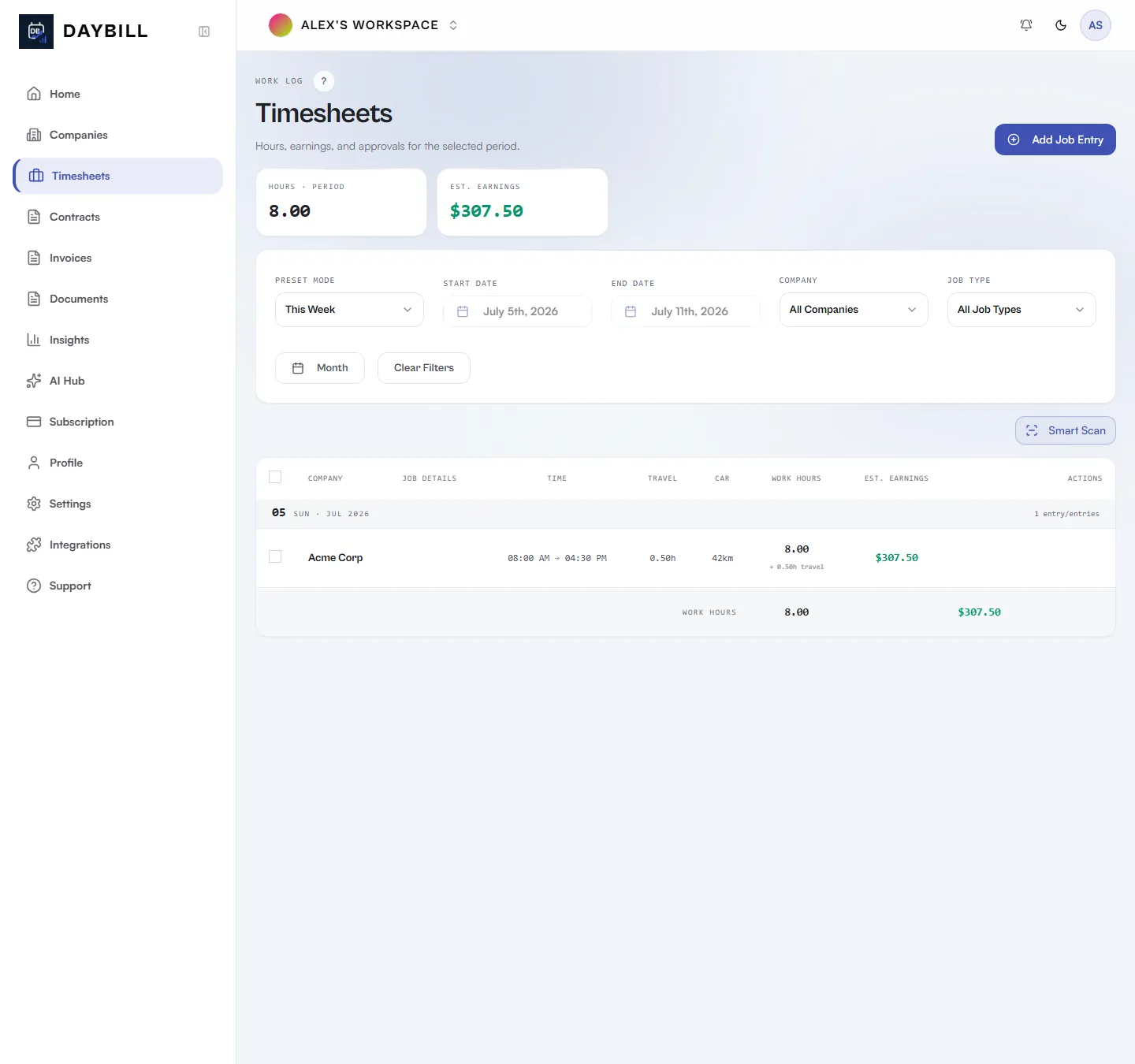
See the source record before export.
Daybill keeps the service date, company, hours, rate, and amount together in Timesheets. Those records are reviewed before the QuickBooks Time CSV is prepared.
Common questions
What columns are in the export file?
The file includes Employee Name, Service Date, Hours, Hourly Rate, and Amount. Each timesheet entry uses one row in the format QuickBooks Time expects.
Is this a QuickBooks integration?
It is a CSV export in QuickBooks Time import format. There is no account linking or API key: download from Daybill, then upload in QuickBooks Time.
Why do employee names have to match?
QuickBooks Time matches rows by name. Daybill warns about blank names before download so entries are not silently skipped.
Which plans can export?
Every plan. QuickBooks and Gusto payroll-ready CSV export is included on the free Solo plan.
No credit card. The free plan stays free and includes CSV export.
Part of the full field crew management stack.